Why do we need a spleen, can we live without it?
Share
The spleen is a silent, yet vital organ that is only remembered when health problems arise. It is small, hidden on the left side of the abdomen, but performs many functions related to immunity, blood quality, and protection against infections.
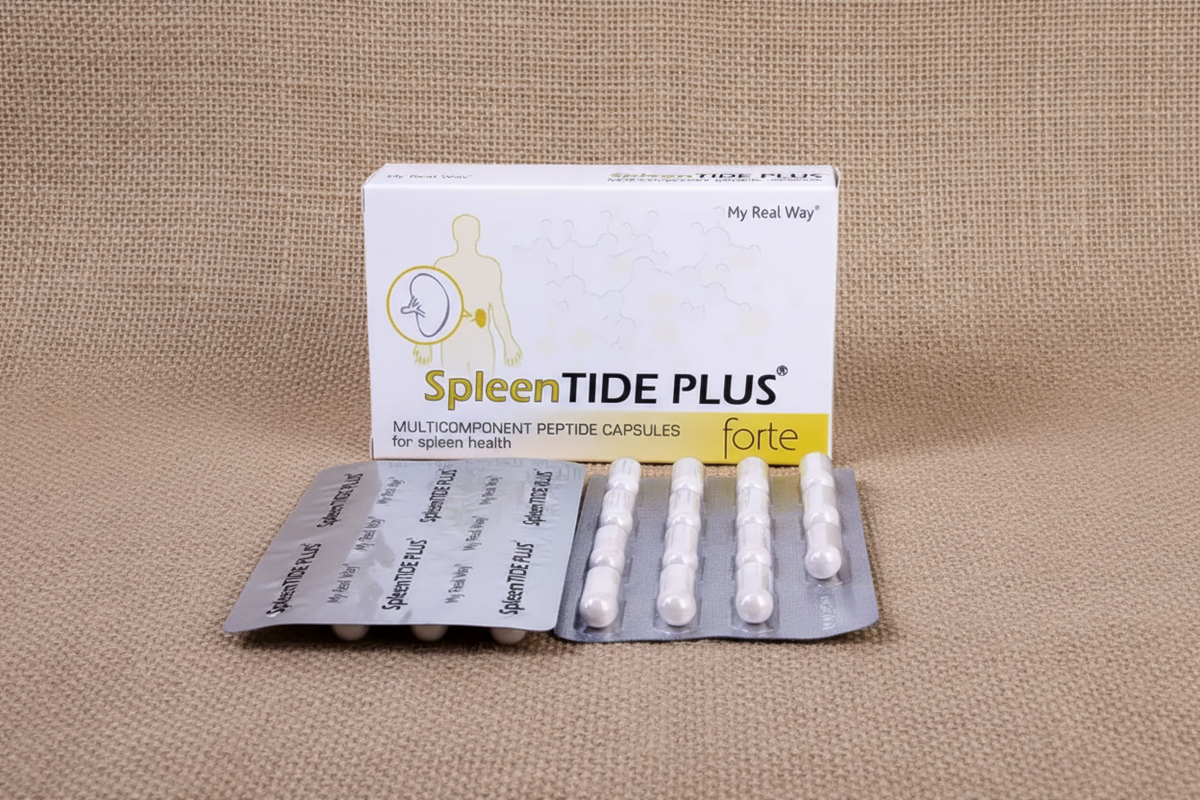
In this article, we will discuss why the spleen is so important, when it can be removed, and how to support its function naturally, including the SpleenTIDE PLUS forte peptide complex.
Why is the spleen so important to the body?
1. Immunity Center
The spleen is where immune cells – lymphocytes and macrophages – mature and activate. It is the first to trap bacteria, viruses and other harmful particles, thus protecting the body from infections.
2. Hematopoietic quality control
The spleen acts as a blood "filter":
- removes old or damaged erythrocytes,
- accumulates platelets and some leukocytes,
- participates in the production of antibodies.
If the spleen does not function properly, the quality of blood cells deteriorates and the immune system weakens.
3. Blood supplies for emergencies
The organ can accumulate some blood and unexpectedly release it during stress, trauma, or intense physical exertion.
Why might the spleen need to be removed?
Removal of the spleen (splenectomy) is only performed in serious conditions:
- traumatic tears after accidents or falls,
- autoimmune diseases (e.g. autoimmune hemolytic anemia, ITP),
- blood diseases (thalassemia, hereditary hemolytic pathologies),
- tumors or cysts,
- severe infectious processes with spleen enlargement.
When organ preservation is not possible, splenectomy becomes the only solution.
Is it possible to live without a spleen?
Yes, a person can live without a spleen, but losing it has consequences.
Weaker immunity
After splenectomy, a person becomes more susceptible to bacterial infections, especially pneumococci, meningococci, and H. influenzae.
Blood filtration is weakened
The number of altered erythrocytes increases, and coagulation may change.
Long-term prevention is needed
- vaccinations,
- prophylaxis (in some cases),
- enhanced immune system support,
- healthy lifestyle.
Therefore, when the spleen's function is impaired or absent, the body needs targeted help.
Natural help for the spleen: SpleenTIDE PLUS forte
SpleenTIDE PLUS forte is a natural peptide bioregulator designed to support spleen tissue function, immunity, and hematopoiesis.
How do peptides work?
Natural peptides selectively affect the DNA of spleen cells and help:
- normalize metabolism in tissues,
- maintain immune response,
- reduce chronic inflammation,
- improve the quality of blood cells,
- restore the structure and function of the spleen.
Additional active ingredients and their effects
In addition to peptides, SpleenTIDE PLUS forte also contains other important active ingredients that enhance the overall effect.
Ferrous fumarate (14 mg, 100% RDI)
- necessary for normal blood formation,
- helps form hemoglobin and erythrocytes,
- maintains energy and reduces symptoms of anemia.
Folic acid (200 µg, 100% RDI)
- needed for the synthesis of red and white blood cells,
- reduces fatigue,
- important for immunity.
Amino acid complex (150 mg)
(peptide complex NL/1, L-leucine, L-isoleucine, L-valine, L-glutamine)
- improves cell regeneration,
- supports protein synthesis,
- helps the body recover from illness.
Chitosan (100 mg)
- helps to remove fat,
- supports healthy cholesterol metabolism,
- improves intestinal function and immunity.
Black cumin extract (75 mg)
- has anti-inflammatory properties,
- traditionally used to strengthen the respiratory tract and immunity.
Bellflower root extract (75 mg)
- improves spleen and lung function,
- helps increase hemoglobin levels,
- strengthens resistance to stress.
Who is SpleenTIDE PLUS forte recommended for?
The product is especially useful when:
impaired spleen function,
frequent infections, weak immunity,
after illnesses, infections, surgeries,
in case of blood cell quality disorders,
after splenectomy – to maintain immunity,
in autoimmune conditions that reduce the number of blood cells.
This is a natural way to help the body restore balance and compensate for the loss or weakening of spleen function.